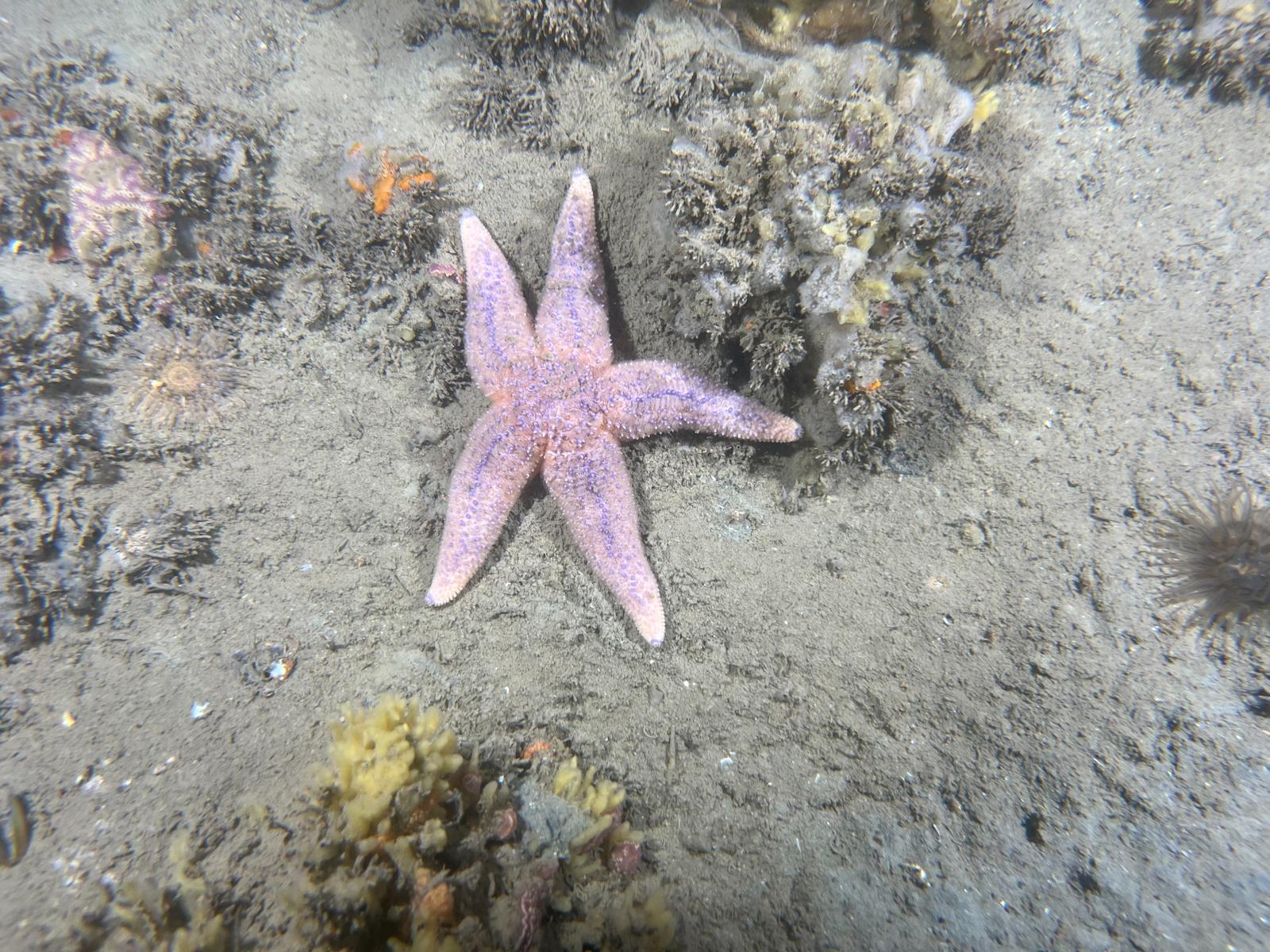
Common Starfish – Asterias rubens – Zeester

Common Starfish - Asterias rubens - Zeester
- Taxonomy: Starfish belong to the class Asteroidea. Which is part of the phylum Echinodermata. This phylum also includes sea urchins, sand dollars and sea cucumbers. The name Asteroidea is derived from the Greek word for “star,” which reflects their star-shaped body.
- Species: There are approximately 1,900 known species of starfish. Varying widely in size, shape and color. Sizes range from less than 2 cm to over 1 meter in diameter.
- Reproduction: Starfish can reproduce both sexually. By releasing eggs and sperm into the water. And asexually through regeneration. If a starfish loses an arm. It can regenerate a new one, and some species can even regenerate an entirely new starfish from a single arm.
- Habitat: Are found in all the world’s oceans, from tropical coral reefs to the deep sea, and from intertidal zones to the abyssal depths. They typically reside on the ocean floor, often among rocks, sand, or coral.
- Diet: Are carnivorous and primarily feed on mollusks. Such as clams, oysters, and snails. They use their tube feet to pry open the shells of their prey and then evert their stomach out through their mouth to digest the food externally.
- Conservation: While many starfish species are abundant. Some are threatened by habitat destruction, climate change and pollution. The iconic sunflower starfish (Pycnopodia helianthoides), for example, has faced severe population declines due to sea star wasting disease.
- Unique Anatomy: They possess a unique water vascular system. Which controls their tube feet and aids in movement, feeding, and respiration. They typically have five arms, but some species can have as many as 40.
- Regeneration: One of the most remarkable abilities of starfish is their capacity for regeneration. Some species can regenerate lost arms, and in certain cases, an entire new starfish can grow from a single severed arm.
- Lifespan: Can live anywhere from 5 to 35 years, depending on the species and environmental conditions.
Starfish: The Stars of the Ocean Floor
When you imagine the ocean floor, your mind might conjure up images of colorful coral, crawling crabs, and swaying seaweed. But among these ocean wonders, there’s another creature that stands out for both its beauty and its fascinating biology: the starfish. Often seen as symbols of the sea, starfish are not just visually striking but also play essential roles in the marine ecosystem.
What is a Starfish?
Also known as sea stars, are members of the Asteroidea class, a group characterized by their star-shaped bodies. Unlike fish, starfish lack gills, fins, and scales, making them truly unique among marine life. Their bodies are made up of a central disc and usually five radiating arms, although some species boast many more.
Covered in bumpy, sometimes spiny skin, starfish have a range of colors from bright oranges and reds to deep blues and purples. These colors not only serve as camouflage but also as a warning to potential predators.
How Do Starfish Live and Eat?
They are fascinating feeders. They mainly prey on mollusks such as clams and oysters. Using their strong tube feet, which operate through hydraulic pressure, they pry open the shells of their prey. Once the shell is open, the starfish performs an extraordinary feat—it pushes its stomach out through its mouth and into the shell to digest the food before retracting it back into its body.
This unique feeding method allows starfish to consume prey much larger than their mouths would otherwise permit. While they are slow movers, their method of feeding is highly effective, making them formidable predators on the ocean floor.
The Magic of Regeneration
One of the most incredible aspects of starfish biology is their ability to regenerate lost limbs. If a starfish loses an arm to a predator or accident, it can grow a new one. In some species, even a single arm can regenerate into a whole new starfish, provided it includes part of the central disc. This remarkable ability not only aids in their survival but also makes them a subject of scientific fascination.
Ecological Importance: Guardians of the Ocean Bed
They are more than just pretty sea creatures; they play a vital role in maintaining the health of marine ecosystems. By preying on bivalves like mussels and clams, they help control the population of these species, which can otherwise dominate and alter the ecosystem. In some regions, starfish are considered keystone species—creatures that have a disproportionately large impact on their environment relative to their abundance.
However, some species can also become problematic. For example, the crown-of-thorns starfish (Acanthaster planci) preys on coral and, in large numbers, can devastate coral reef ecosystems.
Conclusion
Starfish are truly the stars of the ocean floor. Both for their striking appearance and their remarkable biological traits. Whether through their unique feeding habits, their ability to regenerate, or their ecological role. Are a crucial part of marine life. As with many marine creatures, they face threats from human activities, making it all the more important to appreciate and protect these remarkable beings. Next time you’re at the beach or looking into an aquarium, take a moment to admire these incredible creatures and think about the vital role they play in our oceans.