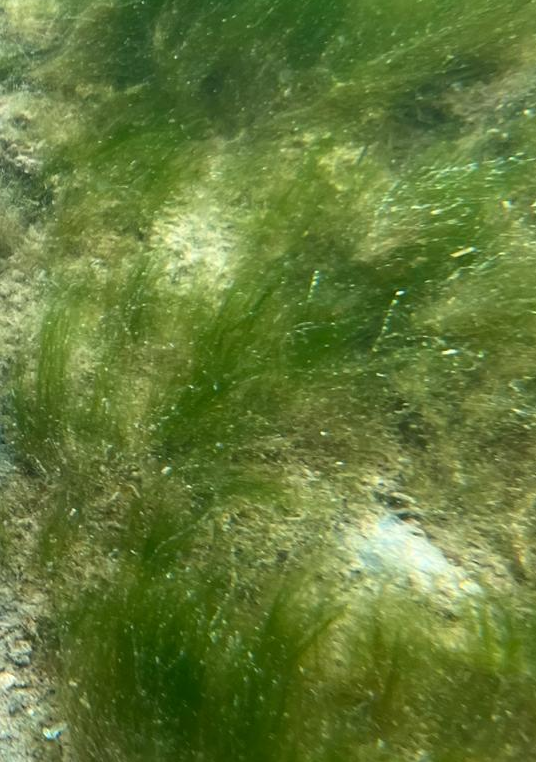
Green Algae (Cladophora spp.) © diving guru

Green Algae (Cladophora spp.)

Green Algae (Cladophora spp.) – Groenwieren

  • Taxonomy Green Algae, scientifically known as Cladophora spp., belong to the division Chlorophyta. They are filamentous algae found in freshwater, brackish, and marine environments.

  • Distribution These algae thrive worldwide, from cold Arctic waters to tropical coastlines. They are most commonly seen in nutrient-rich areas, such as coastal waters, rivers, and lakes. 

  • Appearance Green Algae form dense mats of thread-like filaments. Their vibrant green color comes from chlorophyll, which they use to photosynthesize and produce energy.

Ecological Role

  1. Habitat: Green Algae provide shelter for small aquatic animals, including fish larvae and invertebrates.
  2. Oxygen Production: Through photosynthesis, they contribute oxygen to aquatic ecosystems.
  3. Nutrient Cycling: They absorb nutrients like nitrogen and phosphorus, helping to balance ecosystems.
  • Challenges While beneficial in moderation, Green Algae can overgrow under certain conditions, leading to harmful algal blooms (HABs). These blooms are often caused by nutrient pollution from agricultural runoff or untreated wastewater. HABs deplete oxygen in water and block sunlight, disrupting aquatic life.
  • Adaptability Cladophora species are highly adaptable. They can tolerate varying salinity levels, water temperatures, and light conditions. This resilience allows them to thrive in many environments, but it also makes them challenging to control when overgrowth occurs.

Why Does Green Algae Matter?

They are not just “seaweed.” They play a vital role in aquatic ecosystems. They are food for herbivorous fish and other marine creatures. Additionally, their presence indicates the health of an aquatic environment. In some cultures, species of Cladophora are even harvested for food and fertilizer.

However, unchecked growth can signal environmental imbalances. Algal blooms harm marine biodiversity and disrupt human activities like fishing and diving.

What Can Be Done?

Protecting water quality is key to managing. Reducing nutrient pollution from agriculture and industry helps prevent overgrowth. Supporting conservation programs and learning about the balance of aquatic ecosystems also makes a difference.

Conclusion

Green Algae (Cladophora spp.) are essential to aquatic ecosystems. While they provide oxygen, shelter, and food, they can also cause problems if unchecked. By understanding and protecting these algae, we can maintain the health of our waters for future generations.
Similar Posts

  • Gobies (Gobiidae)

    Gobies (Gobiidae) -Grondels  Taxonomy: Gobies belong to the Gobiidae family. One of the largest fish families in the world. This family includes over 2,000 species, ranging from tiny to medium-sized fish. Species: Some common species found in Zeeland include the Sand Goby (Pomatoschistus minutus), Black Goby (Gobius niger), and Rock Goby (Gobius paganellus). Reproduction: Gobies…

  • Tunicates (Sea Squirts)

    Tunicates (Sea Squirts) – Ascidiacea Class Taxonomy: Tunicates belong to the Ascidiacea class within the Chordata phylum. They are closely related to vertebrates, sharing a notochord during their larval stage.  Species: Over 3,000 species of tunicates exist. They range in size from tiny millimeters to large, football-sized creatures. Some live in colonies, while others are solitary. …

  • Common Brittle Star – Ophiura ophiura

    Common Brittle Star (Ophiura ophiura) – Gewone Slangster Taxonomy: The Common Brittle Star belongs to the Ophiuroidea class, closely related to sea urchins and starfish. It is part of the Ophiura genus, known for their slender arms and flexible bodies. Species: There are around 200 species of brittle stars, varying in color from brown to…

  • Sea Dahlia – Urticina felina

    Sea Dahlia – Urticina felina Taxonomy: The Sea Dahlia (Urticina felina) belongs to the class “Anthozoa”. Which is part of the phylum Cnidaria. This phylum also includes corals and sea anemones. The name “Urticina” derives from Latin. Meaning “nettles” or “stinging”. Reflecting the anemone’s stinging cells. Species: Urticina felina is a solitary sea anemone found in the…

  • Plaice (Pleuronectes platessa)

    Plaice (Pleuronectes platessa) – Schol Taxonomy: The Plaice belongs to the Pleuronectidae family, which includes various species of flatfish. Its scientific name is Pleuronectes platessa. Species: Common plaice is the most widely known species, recognizable by its flat body and orange-red spots. Reproduction: Spawning occurs from January to March in deeper waters. Females lay between…

  • Barrel Jellyfish (Rhizostoma pulmo)

    Barrel Jellyfish (Rhizostoma pulmo) Taxonomy: The Barrel Jellyfish belongs to the Rhizostoma genus. It is a large species of jellyfish found in various ocean habitats. Species: This species can grow up to 90 cm in diameter. Making it one of the largest jellyfish in European waters. Reproduction: Barrel Jellyfish reproduce by releasing eggs and sperm…

Leave a Reply

Your email address will not be published. Required fields are marked *