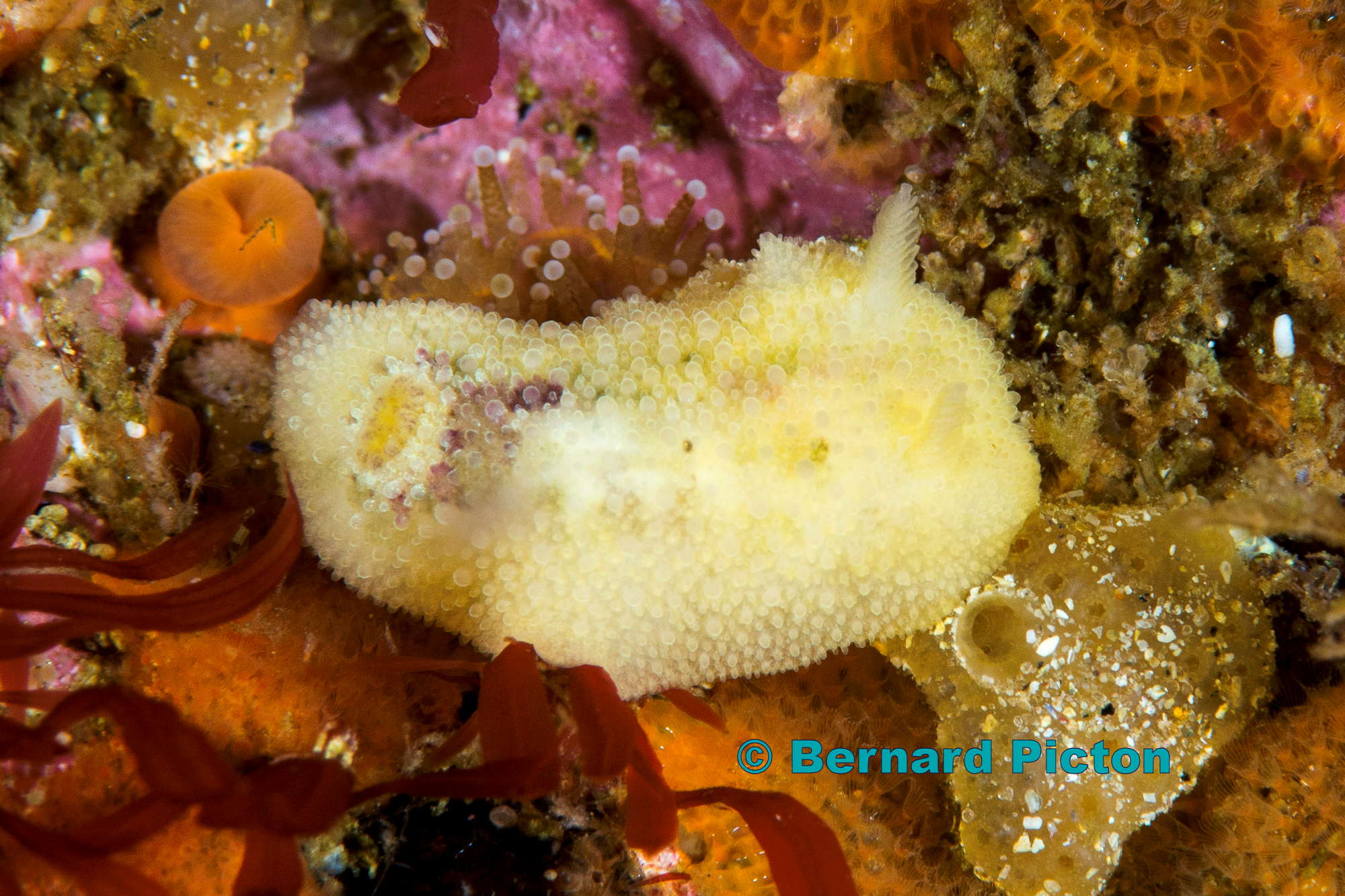
Sea Lemon (Doris pseudoargus)
Sea Lemon (Doris pseudoargus) - Zeecitroen
- Taxonomy: The Sea Lemon belongs to the Discodorididae family. It is a type of nudibranch, a soft-bodied marine gastropod with vibrant colors.
- Appearance: Often yellow with dark spots, resembling a lemon. Adults can grow up to 12 cm in length.
- Habitat: Found along the Atlantic coasts, from Norway to the Mediterranean. They favor rocky seabeds and are often spotted by divers.
- Diet: Herbivores that feed primarily on sponges like Halichondria species.
- Defense Mechanism: Lacks a hard shell but protects itself with a strong chemical secretion, deterring predators.
- Reproduction: Hermaphroditic, allowing self-fertilization. The Sea Lemon lays eggs in spiral-shaped ribbons.
- Lifespan: Typically lives for a few years in the wild.
Sea Lemon: A Colorful Resident of the Sea
They are a unique creature that adds color to the underwater world. This soft-bodied nudibranch is easily recognized by its bright yellow color and spotty appearance. The Sea Lemon is a favorite among divers, not only for its beauty but also for its gentle nature.
What Is a Sea Lemon?
The Sea Lemon, or Doris pseudoargus, is part of a large family of sea slugs. Unlike many marine creatures, it has no protective shell. Instead, it relies on a chemical defense to keep predators at bay. Its soft body is covered in tubercles, giving it a bumpy texture. With a size of up to 12 cm, the Sea Lemon is easy to spot on rocky seabeds.
Life on the Rocks
Prefer rocky coastal areas where sponges are abundant. They move slowly across the rocks, feeding on their sponge diet. These creatures play a role in controlling sponge populations, helping to balance the local ecosystem. Divers often encounter Sea Lemons while exploring coastal waters and are fascinated by their calm and colorful appearance.
Unique Defense and Diet
With no shell, it relies on other ways to protect itself. When threatened, it releases a potent chemical that wards off predators. This secretion gives the Sea Lemon a distinct odor, which may be unpleasant to potential attackers. Its diet mainly consists of sponges, with a preference for specific species like Halichondria. By consuming these sponges, Sea Lemons help to control their growth.
The Life Cycle of a Sea Lemon
Are hermaphroditic, meaning they possess both male and female reproductive organs. This allows them to mate with any other Sea Lemon they encounter or even fertilize their own eggs. After mating, the Sea Lemon lays eggs in a ribbon-like pattern on rocks. These eggs hatch into larvae, which drift in the water until they settle on a suitable rocky habitat.
Importance of Sea Lemons in the Ecosystem
Though small, Sea Lemons contribute to the underwater ecosystem. By feeding on sponges, they help manage sponge populations, indirectly supporting other marine life. Their bright colors add diversity to the underwater landscape, making them a delight for divers.
Conclusion
Sea Lemons are more than just colorful sea slugs. They play a small yet important role in their environment. Their unique appearance, combined with their gentle nature, makes them a favorite among underwater explorers. Next time you dive, keep an eye out for these lemony residents of the sea. They remind us of the vibrant and diverse world beneath the waves.