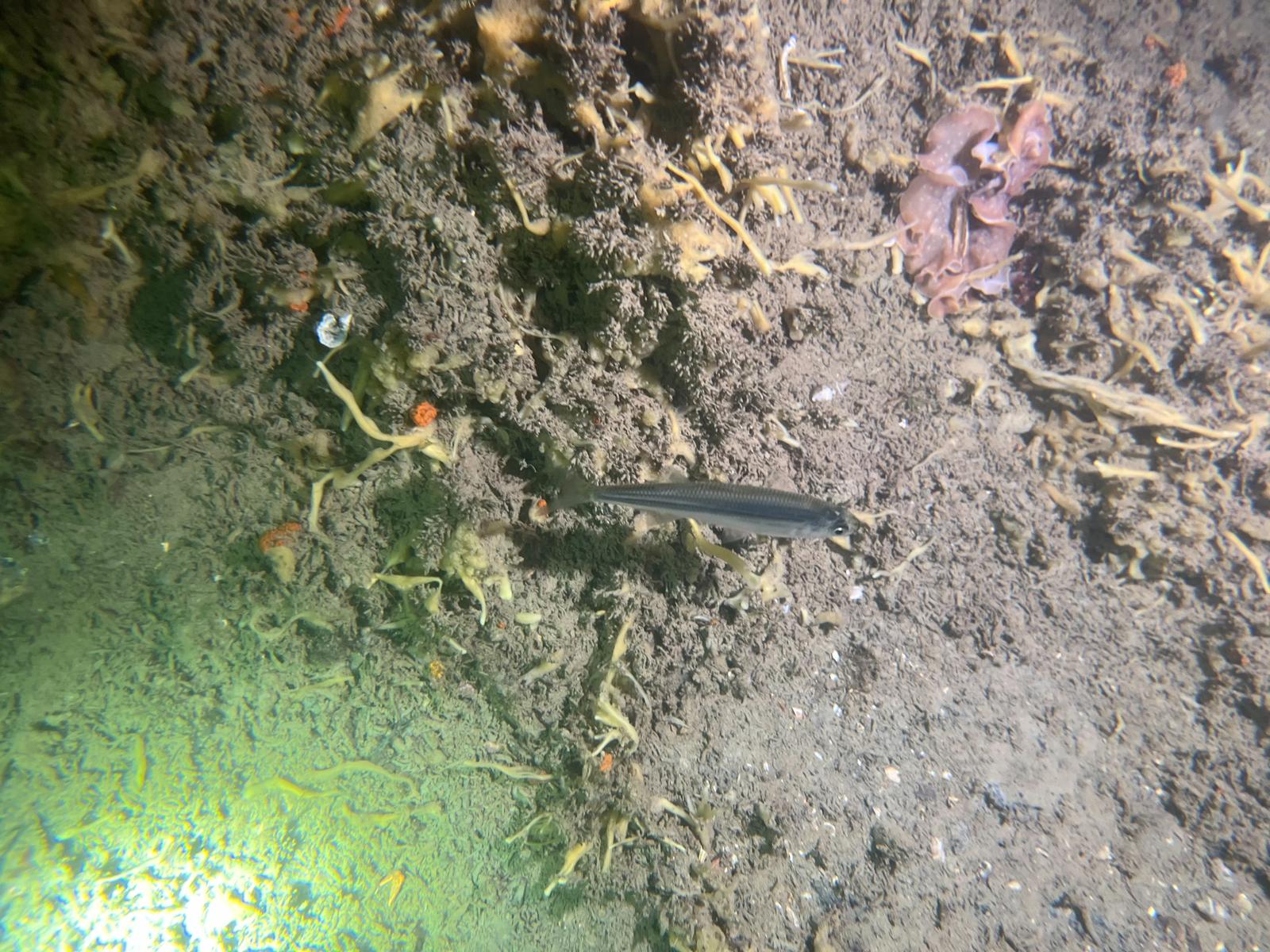
Sand Smelt (Atherina presbyter)
Sand Smelt (Atherina presbyter) - Spiering
- Taxonomy: The Sand Smelt is part of the Atherinidae family. This family includes other small, silvery fish often found in shallow coastal waters.
- Species: The Atherina presbyter is the most common Sand Smelt species in European waters, growing up to 20 cm in length.
- Reproduction: Spawn in shallow waters, releasing their eggs in spring and summer. Females can lay thousands of eggs, which stick to underwater vegetation.
- Habitat: Found along the coasts of the North Atlantic, Mediterranean, and Black Sea. They prefer shallow waters near the shore and are commonly seen in Zeeland.
- Diet: Carnivorous, feeding on plankton, small crustaceans, and other tiny marine life. They hunt in schools, often near the surface.
- Conservation: While not considered endangered, Sand Smelt are vulnerable to overfishing and changes in water quality due to pollution.
- Unique Anatomy: Their slim, elongated bodies and silvery scales make them fast swimmers. They have large eyes adapted for spotting prey in well-lit waters.
- Lifespan: Sand Smelt live up to 3 years, depending on environmental factors and predation.
Sand Smelt: Swift Predators of Shallow Waters
The ocean is full of wonders, from massive whales to colorful coral reefs. However, smaller creatures like the Sand Smelt also play a key role in the marine ecosystem. These sleek, fast-moving fish can often be seen darting through shallow waters in schools.
What is a Sand Smelt?
Also known by its scientific name Atherina presbyter, is a small but energetic fish that thrives in coastal areas. Found in shallow seas along European coastlines, including Zeeland, these fish are known for their shimmering bodies and quick movements. They stay close to shore, where they hunt for small prey in schools.
A Day in the Life of a Sand Smelt
Are highly social, often seen swimming in large groups near the surface of the water. Their main diet consists of plankton and tiny crustaceans, which they catch with precision. These fish are crucial for maintaining balance in coastal ecosystems, as they serve as both predator and prey.
Although they are small, Sand Smelt need to be quick to survive. Their streamlined bodies help them dart through the water, evading larger predators like seabirds and larger fish.
Reproduction: Life Starts in the Shallows
During spring and summer, move closer to shore to spawn. Females lay thousands of sticky eggs that cling to seaweed or rocks. These eggs hatch into larvae, which immediately begin their independent journey in the shallow waters where they were born.
Guardians of Coastal Waters
They are more than just tiny fish in the sea—they are key players in coastal ecosystems. By controlling plankton populations and serving as prey for larger marine animals, they help maintain the balance of the underwater world.
Though not endangered, it faces threats from pollution and habitat destruction. Preserving their environment is essential for maintaining healthy coastal ecosystems, which support a wide variety of marine life.
Conclusion
The Sand Smelt is a swift and vital fish found in coastal waters, especially in areas like Zeeland. Their small size hides their importance in the marine food web. Protecting their habitats ensures that these lively swimmers can continue playing their role in the ecosystem. Next time you’re by the coast, keep an eye out for the shimmering schools of Sand Smelt!