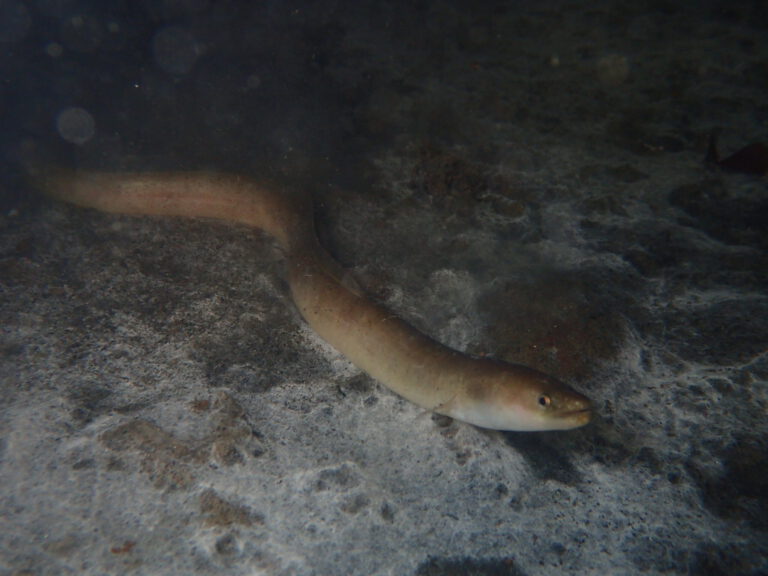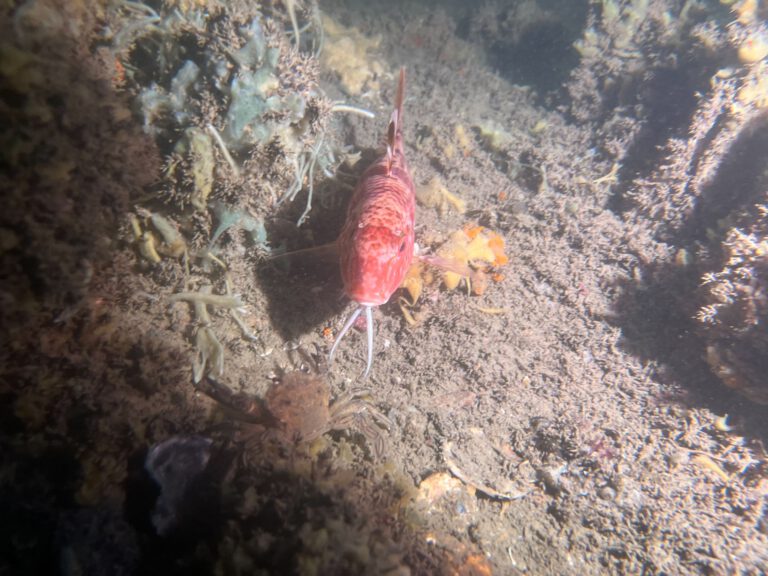
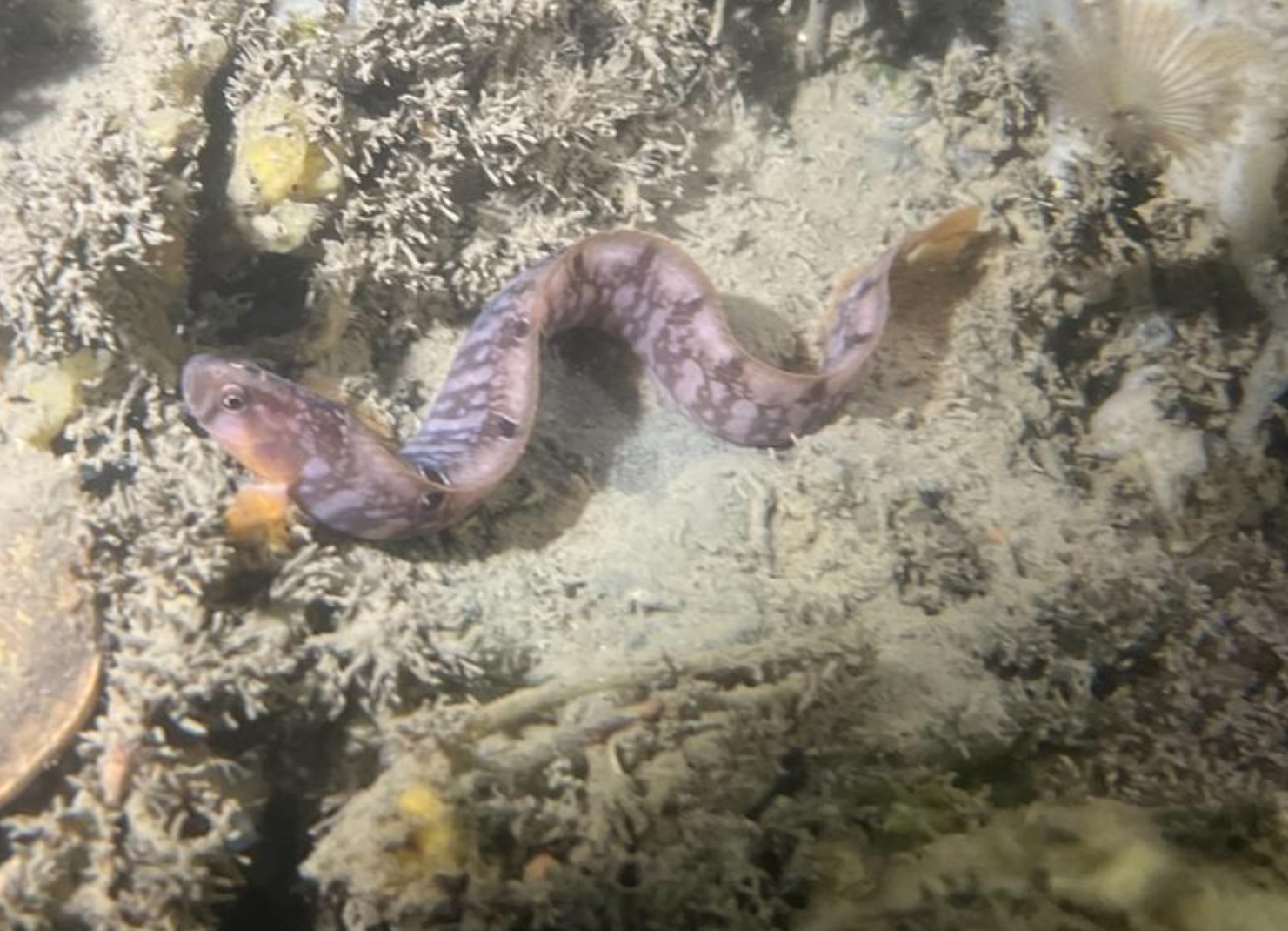
Rock Gunnel (Pholis gunnellus ) – Botervis
Rock Gunnel (Pholis gunnellus ) – Botervis
- Taxonomy: The Rock Gunnel belongs to the Pholidae family, which includes gunnels and similar elongated fish. Its scientific name, Pholis gunnellus, reflects its unique body shape and habitat.
- Species: The Rock Gunnel is the most common species of its genus. It can grow up to 25 cm in length, with an elongated, eel-like body.
- Reproduction: Rock Gunnels spawn during the winter. Females lay clusters of eggs, which they hide under rocks or in crevices. Males guard the eggs until they hatch.
- Habitat: Found along the rocky coasts of the North Atlantic, from Norway to the English Channel, including the shores of Zeeland. It prefers shallow, rocky areas with abundant seaweed for cover.
- Diet: Carnivorous, feeding on small invertebrates like crustaceans, mollusks, and worms. It often hides in crevices and hunts during high tide.
- Conservation: The Rock Gunnel is not currently under threat. However, pollution and habitat destruction can negatively impact its population.
- Unique Anatomy: Its body is elongated, similar to an eel. It has small, soft fins and can survive short periods out of water, as long as its skin remains moist.
- Lifespan: Typically lives up to 5 years in the wild, depending on environmental conditions.
Rock Gunnels: Hidden Hunters of the Rocky Shore
When exploring rocky coasts, you might stumble upon a curious, eel-like fish hiding among the rocks—this is the Rock Gunnel. While it might not be as well-known as other fish, it plays an important role in the underwater world, particularly in shallow, rocky habitats.
What is a Rock Gunnel?
The Rock Gunnel, or Pholis gunnellus, is a small fish commonly found in the North Atlantic, including the coasts of Zeeland. Known for its elongated body and ability to hide in small crevices, the Rock Gunnel is often mistaken for an eel. But unlike eels, it has soft fins and lacks the strong swimming muscles of its more famous relative.
A Day in the Life of a Rock Gunnel
Rock Gunnels spend much of their time hiding under rocks or within seaweed. They are most active during high tide, venturing out to hunt small prey like crustaceans, worms, and mollusks. Despite their small size, they are fierce predators, capable of catching prey with quick movements.
They have a unique adaptation: they can survive for short periods out of water. This is helpful when the tide recedes, leaving them in shallow pools or damp crevices.
Rock Gunnel Reproduction
One of the most fascinating aspects of Rock Gunnels is their reproductive strategy. Unlike many fish species that scatter their eggs, Rock Gunnels carefully lay eggs in clusters, hidden under rocks or in crevices. Males then guard the eggs, protecting them until they hatch. This behavior increases the survival rate of their offspring.
Ecological Role: Guardians of the Rocky Shore
Rock Gunnels are essential for maintaining the balance in rocky coastal ecosystems. By hunting small invertebrates, they help control populations of crustaceans and worms, which, in turn, supports the biodiversity of these areas.
Conclusion
The Rock Gunnel may be small and often overlooked, but it is an important part of its environment. Its ability to survive in the harsh conditions of the rocky shore and its unique reproductive behaviors make it a fascinating species worth learning about. Next time you’re diving or exploring the coast, keep an eye out for these hidden hunters.