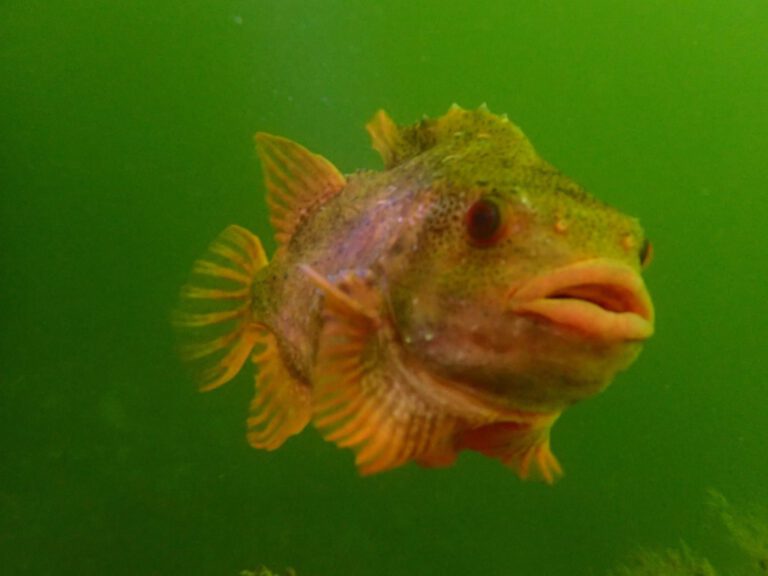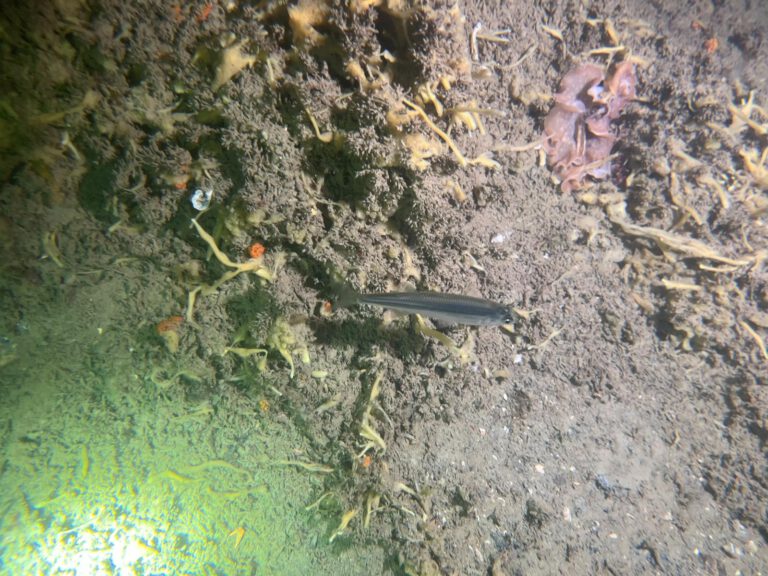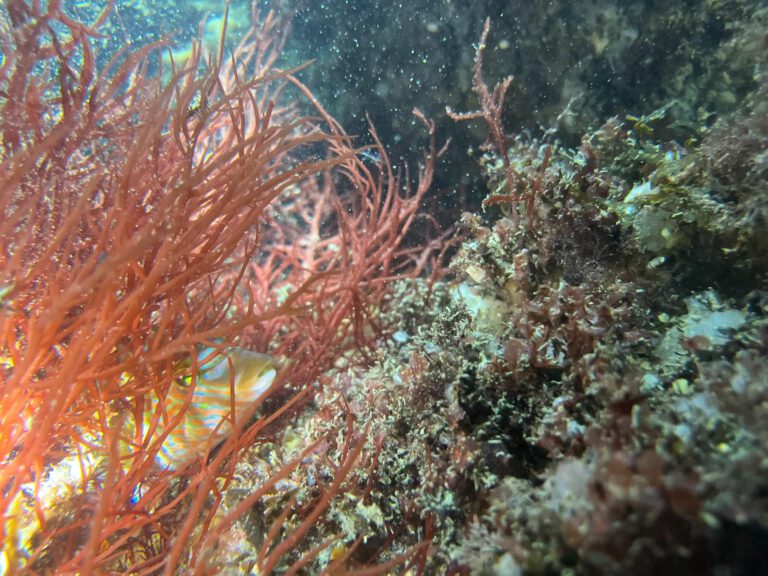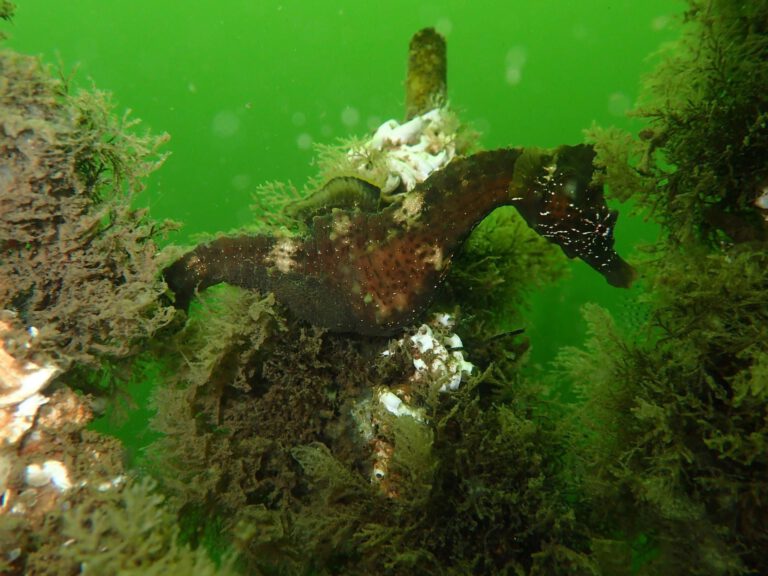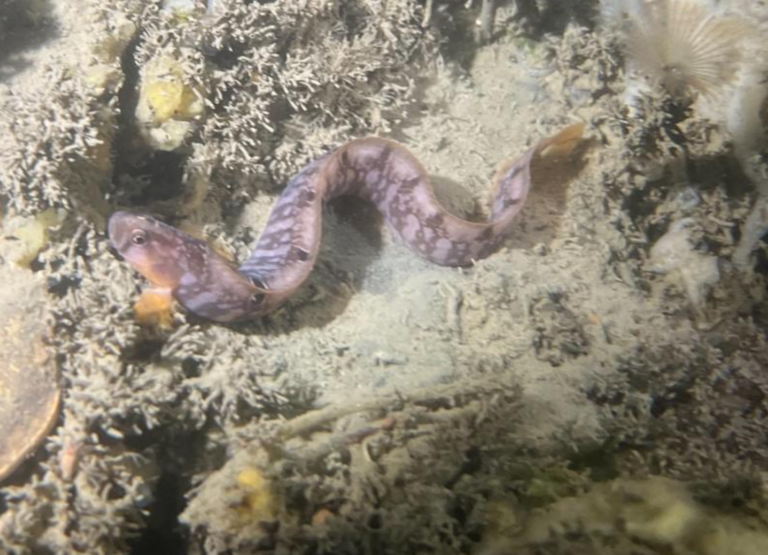
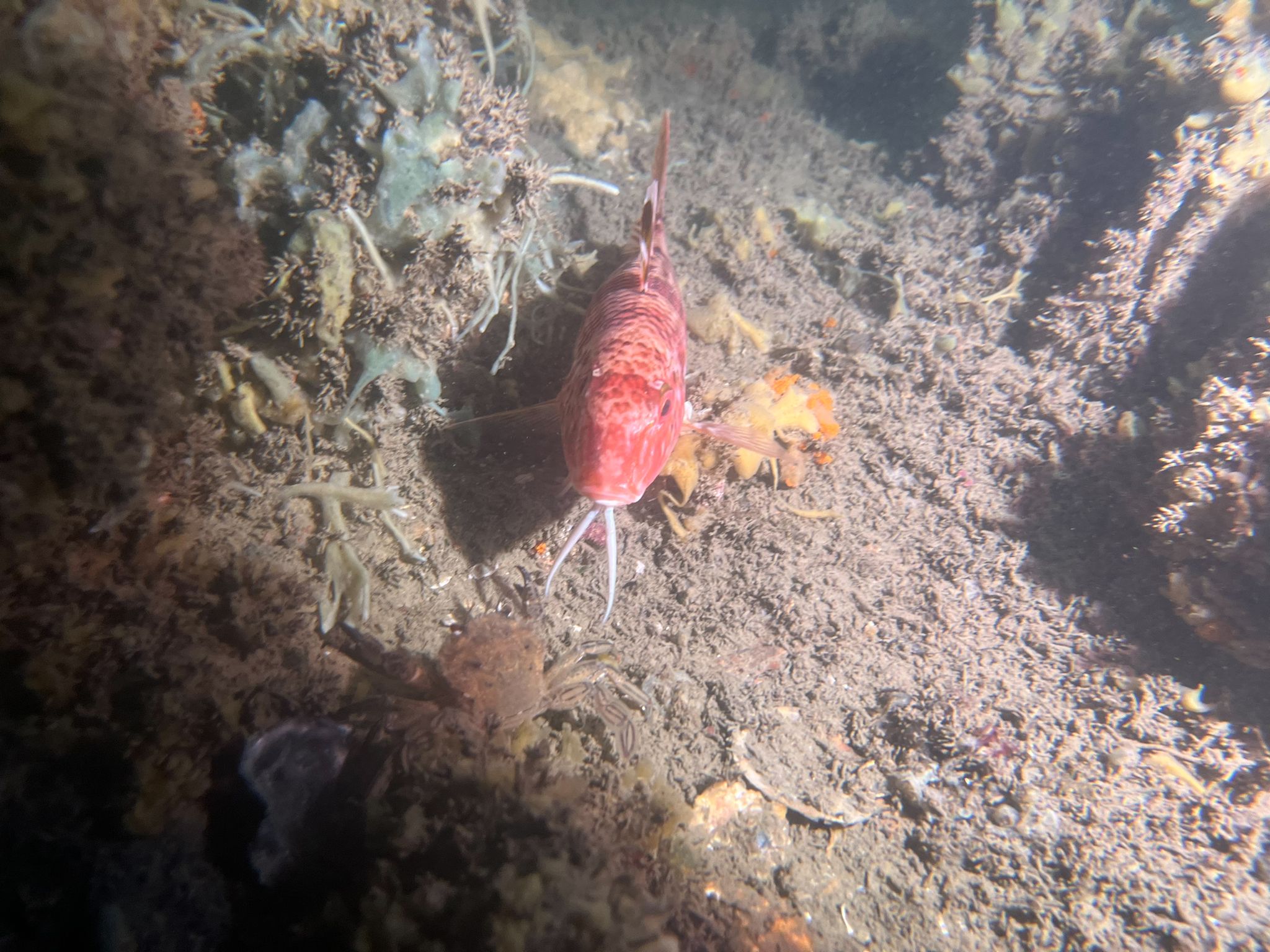
Striped Red Mullet (Mullus surmuletus)
Striped Red Mullet (Mullus surmuletus) - Rode Mul
Taxonomy: The Striped Red Mullet belongs to the Mullidae family. This family includes fish known for their distinctive whiskers near the chin.
Species: The Striped Red Mullet can grow up to 30 cm in length and has a slender body with a unique coloration.
Reproduction: They reproduce in the spring and summer. Males and females come together in shallow waters for spawning.
Habitat: You can find them in sandy and muddy bottoms of coastal waters. They prefer depths of up to 50 meters and are common in the Mediterranean and North Sea.
Diet: Striped Red Mullets are carnivorous. They mainly feed on small crustaceans, worms, and mollusks. They use their sensory barbels to locate prey buried in the sand.
Conservation: While currently not endangered, their populations face threats from overfishing and habitat destruction. Sustainable fishing practices are important for their future.
Unique Anatomy: They have a streamlined body and two dorsal fins. Their barbels help them detect food in murky waters.
Color Change: Striped Red Mullets display vibrant colors, with red and yellow stripes running along their bodies. These colors can change slightly depending on their environment.
Lifespan: They can live up to 10 years in the wild.
Striped Red Mullet: A Culinary Delight of the Sea
When you think of seafood, certain fish might spring to mind. However, the Striped Red Mullet, known as Mullus surmuletus, is a remarkable fish that deserves attention. This beautiful species, with its striking appearance and rich flavor, plays an important role in both marine ecosystems and culinary traditions.
What is the Striped Red Mullet?
The Striped Red Mullet is a small, colorful fish found in shallow coastal waters. With a sleek body and distinctive red and yellow stripes, it is easily recognizable. This fish often burrows into the sandy sea floor to find food. Its unique barbels help it detect prey hidden in the substrate.
A Day in the Life of a Striped Red Mullet
These fish are not only beautiful but also fascinating in their behavior. They swim in small schools, providing safety in numbers. Striped Red Mullets are opportunistic feeders, using their keen sense of touch to find crustaceans and worms. They often forage during the day, searching the seabed for their next meal.
Reproduction and Growth
During the warmer months, Striped Red Mullets engage in a unique reproductive process. They gather in shallow waters to spawn. This is crucial for maintaining healthy populations. After laying their eggs, the young hatch and begin their journey through life in the ocean.
Ecological Importance
Striped Red Mullets play a significant role in their ecosystems. By controlling the populations of their prey, they help maintain a balanced marine environment. Their presence indicates a healthy coastal ecosystem. Protecting their habitats is essential for the health of our oceans.
Conclusion
The Striped Red Mullet is a remarkable fish, combining beauty and ecological significance. Whether enjoyed in a seafood dish or observed in its natural habitat, this species deserves our respect and protection. As we dive into the ocean, let us appreciate these vibrant fish and their important role in the underwater world.